
Сообщения пользователя: DragonBattleMage

Сообщение #2
You’re Stuck on the Periscope Because You’re Focused on the Wrong Thing, and while I am no expert or even a top player, but from my perspective here is what I suggest...
If you’re trying to “use” the Periscope in the early game and can’t figure it out, it’s because you’re focused on the wrong part of Xcraft. Missions are optional hints — not the core of the game. When you’re “ready” for them, you usually still aren’t and will probably need a friend or ally to help you. That’s fine. The sooner you understand that missions are secondary, the faster you’ll grow.
Before anything else, read this guide:
Beginners Guide
Read it a few times and actually do what it says. It will save you months of mistakes. A lot of what I’m saying here is just expanding on that post. So go there read it a far more advanced player than me wrote it, but as he says he is tired of repeating himself. Based on your question you have not yet read his very smart advice. So go now, do what he says. Or become someone else's feast. Your choice.
Here’s the truth people don’t listen to:
Early game = raid, rob, attack, recycle, move, and push your tech.
Not sitting on a planet building defenses.
Not grinding missions.
Not redeeming shiny toys you’re not ready for.
Ignore the Periscope. Ignore missions. That’s not how you grow.
The Periscope isn’t the point. Missions aren’t the point. Xcraft is built on math, mobility, and aggression, not linear quests. You grow by raiding. You grow by moving. You grow by hitting inactives, recycling debris, and stealing resources.
Focus on ONE planet first. Once you have some tech and can defend a colony ship, send it far away so nearby enemies won’t find it. Rush Robotics → Nanites → Nano-tech research, Shipyard, and Research Labs. That’s how you get more visibility; each planet has a vision radius through the fog of war. This is a game about WAR, FIGHTING, STEALING, and RAIDING… not building Periscopes. If you want more visibility, make friends and beg them to share their view.
R&R — Research and Raiding — is how you build and grow your fleet. Attack all the inactive players. If I repeat myself, it’s on purpose.
This is the production engine of the entire game. Once your planet has Research Lab 14 with Nano Lab 4, Robotics 10, Nanite 4, and Interplanetary Research running, things get interesting. You now have tech comparable to larger players. Research plateaus, and what you need then is a powerful, agile, ALWAYS MOBILE fleet. Unless you have a massive FAS — and early on, there’s almost no point to that.
Early planets are not “home bases.” They are launchpads to get your tech high enough to produce real ships. Worry about building up multiple worlds later. And again: read that forum post. Do NOT make the classic mistake of setting up multiple worlds in one system. It’s a giant red flag.
When you colonize new worlds, go far from your Capital to expand your map radius and meet new people. Make friends far away and beg them to share visibility. Yes, I said it again.
Stay under 30k points as long as possible.
Under 30k = protection.
Over 30k = you’re free food.
Use that protection window to race ahead in tech and fleet — not to dump resources into meaningless walls of buildings.
STOP building early defenses. They are a trap. You don't need resource storage keep them and your fleet moving.
If you dump resources into defenses, you get a bloated planet, a weak fleet, no mobility, and a giant “HIT ME” sign on your coordinates. Static defenses do not save you.
I can wipe out 1,000 Heavy Lasers + 1,000 Missile Launchers with one Death Star (or Flagship), a couple Science Vessels, and some random ships protected by FAS. Early game, you don’t have that luxury. FAS grows slowly, and you must understand: if your fleet is not moving, you are setting the table for your enemies to feast. In this game you have a lot of enemies. And yes, I am one of them, but I love a fair fight so I will tell you the truth, because when I come for you I don't want to just destroy a weak opponent I want to annihilate someone who put in a good fight. I want to have to out think you. I want you to make me be clever. I don't want an easy victory, if I did I would go play farmville. One misstep is enough.
And yes — high-level players can build four Death Stars a day if they want. BUT DO THEY? Go watch the epic battles on the homepage. What do they tell you? THEY DO NOT! WHY? Early on they’re slow, clunky, and useless without major gravity-tech and support research. By the time Death Stars are truly useful, you’ll be hunting far bigger prizes.
Mobility always outweighs fortification.
Build a mobile fleet — not a fortress. The number that matters is: how fast can you rebuild your fleet? See Below. What does your defense assembly speed tell you? I took screens of my slow planets so I do not reveal my full strength, but if you are at 20-100k you have a long way to go.
If someone launches an attack and I have 25 minutes to prepare as is often the case. First they were pretty sure they can beat you based on what’s incoming. Now, if you have been smart and your fleet is in high orbit (so it can be recalled in time), and you have enough resources to build Scourge because you’ve been mining a nearby comet, you have options.
You recall your recyclers. In that 25 minutes, maybe you build 1,500 Scourge to greet the incoming fleet. Many cocky players don’t watch their flight once they launch. If you keep your fleet mobile and your resources close, they never saw your true size. They underestimate you. Most won’t probe again after sending the attack.
Understand: most of what people do in life is ego. You don’t pass the slower car to get home 20 seconds faster — you pass because your ego won’t let you follow. Same thing here.
Xcraft is intelligent and complex and these variables matter. Watch your opponents. Learn their patterns. When are they online? How do they respond to conflict? Do they panic, or stay calm? Are they prepared for WCS? Do they have a backup plan? Are they arrogant enough to think nobody will punish their mistakes?
No one is invincible. Even players 1–10 know their position can change. That’s why they keep moving, keep fleets hidden, never stack everything in one place, never leave their power tied to a planet where someone can steal it. Do not react emotionally. Do not chase revenge immediately and make things worse.
Revenge is a dish best served cold. Let it steep. Plot your moves, and when an opportunity appears, hit hard and fast. Don’t give your opponent 25–30 minutes to recall fleets and stack defenses. I’ve had so many battles where it looked like I was about to get wiped — then, as soon as their fleet entered the system, it met a welcoming committee they never planned for. Suddenly they’re slamming the recall button, screaming, “OMG WHAT IS GOING ON??” You’re cutting their fleet to shreds and scooping the debris before they understand. Then you get the message calling you all sorts of names but they don't even realize you are moving in to kill the home world their attack revealed to you.
Don’t fall into the traps this game sets for you. Be skeptical. Be aware. Think like a commander responsible for the lives under you. A healthy level of paranoia keeps you alive.
And remember: just because the simulation says you “won” doesn’t mean you really won. If you “win” but lose your entire fleet in mutual annihilation and only get a moon out of it, that’s not a victory. Now you have to rebuild — with what?
And you’re worried about the Periscope? It’s cute, like watching kittens… while hungry rats circle them. The rats will seize that opportunity. Don’t be the kitten.
A good early fleet is fast, diverse, and hits hard: fighters, stealth fighters, destroyers, battle cruisers, bombers, and science vessels for buffs. This lets you raid, strike, retreat, and reposition. Static defenses do none of that.
Specialized ships matter. Don’t send the wrong units and then wonder why you lost.
Different ships exist for different targets. If you attack a fleet with ground-focused ships, you wasted the flight. Study your battle logs. Open details. See what dealt damage, what tanked, what failed. Your logs are your best teacher. Watch battles on the home page, not with “I wish I had that fleet,” but asking: what did the victor do right and wrong? What was the defender’s biggest mistake?
Upgrade your Simulator and hire officers.
If you’re buying HC (which is fine and supports the devs), officers are an excellent use of it: Admiral, General, Recycler, Protector, and the ones that boost speed, survivability, armor, and weapons. These multipliers are huge. They give you more power than another 300 Heavy Lasers ever will.
Alliance tags don’t save you. Strategy does.
Joining a random alliance for “protection” is pointless. Unless some group is actively bullying you and you defect to them (short-term fix), an alliance won’t protect bad play. Your survival comes from being fast, unpredictable, and mathematically efficient.
Look for alliances near you or in whose territory you operate. Do they match your play style? And if they let you join instantly, run. Find one that vets you and puts you through an academy. They want to know you’re stable, not a warmonger, and loyal. You’re new — you have to prove yourself.
Meanwhile, you’re worrying about your Periscope? What is that doing for you? Exactly nothing. Please move on and focus on what matters. I asked the same question once. Do yourself a favor and change your thinking now.
NOW LISTEN VERY CAREFULLY ABOUT THE FLAGSHIP:
DO. NOT. REDEEM. IT.
YOU ARE NOT READY FOR IT.
Do not redeem the Jouann, the Ripper, or any flagship unless you can afford the gas to keep it moving — and you cannot. Gas is the big choke point in this game. It feels plentiful at the start only because you’re not moving. Soon it becomes the thing that holds you back.
You need to learn to mine comets, and that’s not easy when your fleet must stay mobile.
So, flagships: NO NO NO. DON’T. Trust me, you are not ready. You redeem that Jouann and it means one thing: there’s a medal for destroying one. Someone is going to earn it off you.
Not “don’t fly it.”
Not “store it.”
Not “redeem it, then upgrade later.”
Do NOT redeem it.
There’s a reason you can’t figure out where it is. The game is protecting you from yourself. That flagship is a trap for beginners. It’s slow, un-upgraded, and a giant neon target for anyone with Scourge or Scavengers. A smart sub-30k player can steal it instantly.
If you redeem it early, you are almost guaranteed to lose it.
You save that flagship for when you’re in the millions of points, with the research and upgrades to make it a weapon instead of a steel coffin. Again: the reference guide at https://xcraft.net/forum/topic_53445 shows you how to get there the right way. Use it.
Final Truth
Defense is fake safety.
Mobility is real safety.
Planets don’t win this game.
Fleets do.
Move your ships.
Raid aggressively.
Use math.
Do not redeem the flagship until you have gravity tech and the eco to support it.
And stop staring at the Periscope and Workshop recipes — you’re nowhere near them yet. It is better to make friends and beg them to share their visibility with you to see more of what the fog of war is hiding. Think about that. Why do they call it the fog of war? Because this is a game about war. Raid and Recycle. That is how you grow. That is how you survive. Right now you should be attacking every inactive player around you picking their bones clean. When their are no more start attacking every player who you can beat without mercy. Keep doing this and you will grow quickly.
This is how you stop being prey and start being a hunter in Xcraft. Trust me I learned this hard way.
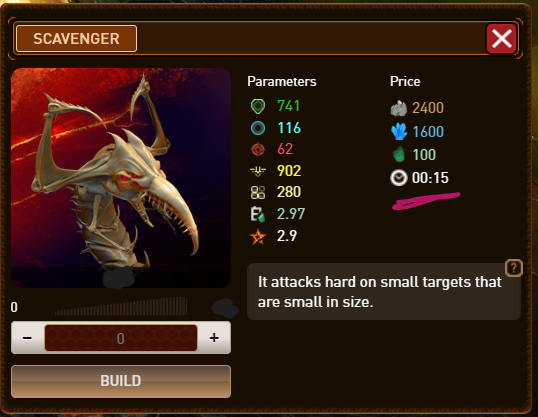
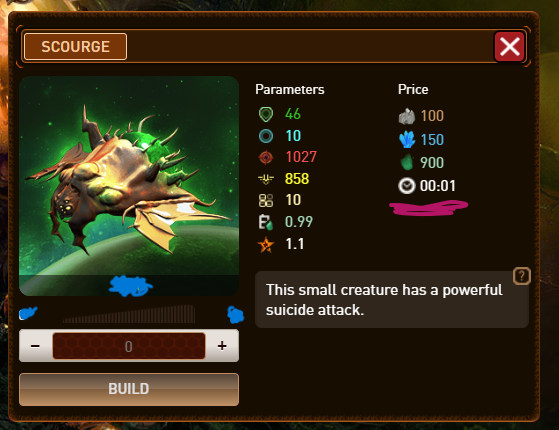
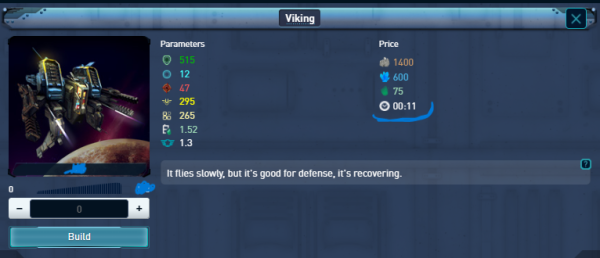
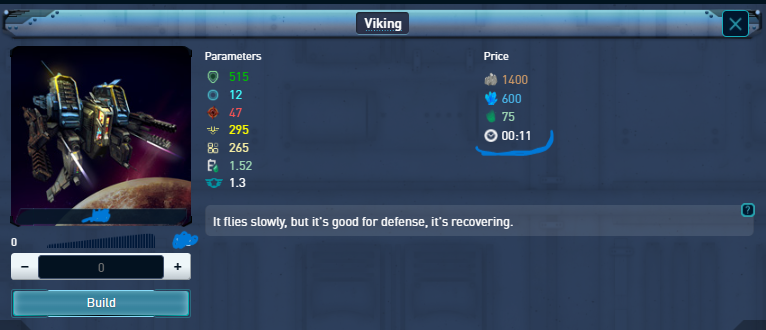
Below are the numbers that are important notice something the workshop shows I have a message and I have not even opened it. Why? Because what is the point so early in the game? It is a distraction. What are these numbers? These tell you how fast you can build. You need fleet the best way to get it is is to raid and recycle. Keep doing this over and over and you will have enough resources to build a nice fleet, but keep that fleet moving. And for heaven sake don't be predictable keep changing your play style. Trust me. You are being watched the moment you cross 30k points. Why because you became meat, and in this game we are all hungry.



If you’re trying to “use” the Periscope in the early game and can’t figure it out, it’s because you’re focused on the wrong part of Xcraft. Missions are optional hints — not the core of the game. When you’re “ready” for them, you usually still aren’t and will probably need a friend or ally to help you. That’s fine. The sooner you understand that missions are secondary, the faster you’ll grow.
Before anything else, read this guide:
Beginners Guide
Read it a few times and actually do what it says. It will save you months of mistakes. A lot of what I’m saying here is just expanding on that post. So go there read it a far more advanced player than me wrote it, but as he says he is tired of repeating himself. Based on your question you have not yet read his very smart advice. So go now, do what he says. Or become someone else's feast. Your choice.
Here’s the truth people don’t listen to:
Early game = raid, rob, attack, recycle, move, and push your tech.
Not sitting on a planet building defenses.
Not grinding missions.
Not redeeming shiny toys you’re not ready for.
Ignore the Periscope. Ignore missions. That’s not how you grow.
The Periscope isn’t the point. Missions aren’t the point. Xcraft is built on math, mobility, and aggression, not linear quests. You grow by raiding. You grow by moving. You grow by hitting inactives, recycling debris, and stealing resources.
Focus on ONE planet first. Once you have some tech and can defend a colony ship, send it far away so nearby enemies won’t find it. Rush Robotics → Nanites → Nano-tech research, Shipyard, and Research Labs. That’s how you get more visibility; each planet has a vision radius through the fog of war. This is a game about WAR, FIGHTING, STEALING, and RAIDING… not building Periscopes. If you want more visibility, make friends and beg them to share their view.
R&R — Research and Raiding — is how you build and grow your fleet. Attack all the inactive players. If I repeat myself, it’s on purpose.
This is the production engine of the entire game. Once your planet has Research Lab 14 with Nano Lab 4, Robotics 10, Nanite 4, and Interplanetary Research running, things get interesting. You now have tech comparable to larger players. Research plateaus, and what you need then is a powerful, agile, ALWAYS MOBILE fleet. Unless you have a massive FAS — and early on, there’s almost no point to that.
Early planets are not “home bases.” They are launchpads to get your tech high enough to produce real ships. Worry about building up multiple worlds later. And again: read that forum post. Do NOT make the classic mistake of setting up multiple worlds in one system. It’s a giant red flag.
When you colonize new worlds, go far from your Capital to expand your map radius and meet new people. Make friends far away and beg them to share visibility. Yes, I said it again.
Stay under 30k points as long as possible.
Under 30k = protection.
Over 30k = you’re free food.
Use that protection window to race ahead in tech and fleet — not to dump resources into meaningless walls of buildings.
STOP building early defenses. They are a trap. You don't need resource storage keep them and your fleet moving.
If you dump resources into defenses, you get a bloated planet, a weak fleet, no mobility, and a giant “HIT ME” sign on your coordinates. Static defenses do not save you.
I can wipe out 1,000 Heavy Lasers + 1,000 Missile Launchers with one Death Star (or Flagship), a couple Science Vessels, and some random ships protected by FAS. Early game, you don’t have that luxury. FAS grows slowly, and you must understand: if your fleet is not moving, you are setting the table for your enemies to feast. In this game you have a lot of enemies. And yes, I am one of them, but I love a fair fight so I will tell you the truth, because when I come for you I don't want to just destroy a weak opponent I want to annihilate someone who put in a good fight. I want to have to out think you. I want you to make me be clever. I don't want an easy victory, if I did I would go play farmville. One misstep is enough.
And yes — high-level players can build four Death Stars a day if they want. BUT DO THEY? Go watch the epic battles on the homepage. What do they tell you? THEY DO NOT! WHY? Early on they’re slow, clunky, and useless without major gravity-tech and support research. By the time Death Stars are truly useful, you’ll be hunting far bigger prizes.
Mobility always outweighs fortification.
Build a mobile fleet — not a fortress. The number that matters is: how fast can you rebuild your fleet? See Below. What does your defense assembly speed tell you? I took screens of my slow planets so I do not reveal my full strength, but if you are at 20-100k you have a long way to go.
If someone launches an attack and I have 25 minutes to prepare as is often the case. First they were pretty sure they can beat you based on what’s incoming. Now, if you have been smart and your fleet is in high orbit (so it can be recalled in time), and you have enough resources to build Scourge because you’ve been mining a nearby comet, you have options.
You recall your recyclers. In that 25 minutes, maybe you build 1,500 Scourge to greet the incoming fleet. Many cocky players don’t watch their flight once they launch. If you keep your fleet mobile and your resources close, they never saw your true size. They underestimate you. Most won’t probe again after sending the attack.
Understand: most of what people do in life is ego. You don’t pass the slower car to get home 20 seconds faster — you pass because your ego won’t let you follow. Same thing here.
Xcraft is intelligent and complex and these variables matter. Watch your opponents. Learn their patterns. When are they online? How do they respond to conflict? Do they panic, or stay calm? Are they prepared for WCS? Do they have a backup plan? Are they arrogant enough to think nobody will punish their mistakes?
No one is invincible. Even players 1–10 know their position can change. That’s why they keep moving, keep fleets hidden, never stack everything in one place, never leave their power tied to a planet where someone can steal it. Do not react emotionally. Do not chase revenge immediately and make things worse.
Revenge is a dish best served cold. Let it steep. Plot your moves, and when an opportunity appears, hit hard and fast. Don’t give your opponent 25–30 minutes to recall fleets and stack defenses. I’ve had so many battles where it looked like I was about to get wiped — then, as soon as their fleet entered the system, it met a welcoming committee they never planned for. Suddenly they’re slamming the recall button, screaming, “OMG WHAT IS GOING ON??” You’re cutting their fleet to shreds and scooping the debris before they understand. Then you get the message calling you all sorts of names but they don't even realize you are moving in to kill the home world their attack revealed to you.
Don’t fall into the traps this game sets for you. Be skeptical. Be aware. Think like a commander responsible for the lives under you. A healthy level of paranoia keeps you alive.
And remember: just because the simulation says you “won” doesn’t mean you really won. If you “win” but lose your entire fleet in mutual annihilation and only get a moon out of it, that’s not a victory. Now you have to rebuild — with what?
And you’re worried about the Periscope? It’s cute, like watching kittens… while hungry rats circle them. The rats will seize that opportunity. Don’t be the kitten.
A good early fleet is fast, diverse, and hits hard: fighters, stealth fighters, destroyers, battle cruisers, bombers, and science vessels for buffs. This lets you raid, strike, retreat, and reposition. Static defenses do none of that.
Specialized ships matter. Don’t send the wrong units and then wonder why you lost.
Different ships exist for different targets. If you attack a fleet with ground-focused ships, you wasted the flight. Study your battle logs. Open details. See what dealt damage, what tanked, what failed. Your logs are your best teacher. Watch battles on the home page, not with “I wish I had that fleet,” but asking: what did the victor do right and wrong? What was the defender’s biggest mistake?
Upgrade your Simulator and hire officers.
If you’re buying HC (which is fine and supports the devs), officers are an excellent use of it: Admiral, General, Recycler, Protector, and the ones that boost speed, survivability, armor, and weapons. These multipliers are huge. They give you more power than another 300 Heavy Lasers ever will.
Alliance tags don’t save you. Strategy does.
Joining a random alliance for “protection” is pointless. Unless some group is actively bullying you and you defect to them (short-term fix), an alliance won’t protect bad play. Your survival comes from being fast, unpredictable, and mathematically efficient.
Look for alliances near you or in whose territory you operate. Do they match your play style? And if they let you join instantly, run. Find one that vets you and puts you through an academy. They want to know you’re stable, not a warmonger, and loyal. You’re new — you have to prove yourself.
Meanwhile, you’re worrying about your Periscope? What is that doing for you? Exactly nothing. Please move on and focus on what matters. I asked the same question once. Do yourself a favor and change your thinking now.
NOW LISTEN VERY CAREFULLY ABOUT THE FLAGSHIP:
DO. NOT. REDEEM. IT.
YOU ARE NOT READY FOR IT.
Do not redeem the Jouann, the Ripper, or any flagship unless you can afford the gas to keep it moving — and you cannot. Gas is the big choke point in this game. It feels plentiful at the start only because you’re not moving. Soon it becomes the thing that holds you back.
You need to learn to mine comets, and that’s not easy when your fleet must stay mobile.
So, flagships: NO NO NO. DON’T. Trust me, you are not ready. You redeem that Jouann and it means one thing: there’s a medal for destroying one. Someone is going to earn it off you.
Not “don’t fly it.”
Not “store it.”
Not “redeem it, then upgrade later.”
Do NOT redeem it.
There’s a reason you can’t figure out where it is. The game is protecting you from yourself. That flagship is a trap for beginners. It’s slow, un-upgraded, and a giant neon target for anyone with Scourge or Scavengers. A smart sub-30k player can steal it instantly.
If you redeem it early, you are almost guaranteed to lose it.
You save that flagship for when you’re in the millions of points, with the research and upgrades to make it a weapon instead of a steel coffin. Again: the reference guide at https://xcraft.net/forum/topic_53445 shows you how to get there the right way. Use it.
Final Truth
Defense is fake safety.
Mobility is real safety.
Planets don’t win this game.
Fleets do.
Move your ships.
Raid aggressively.
Use math.
Do not redeem the flagship until you have gravity tech and the eco to support it.
And stop staring at the Periscope and Workshop recipes — you’re nowhere near them yet. It is better to make friends and beg them to share their visibility with you to see more of what the fog of war is hiding. Think about that. Why do they call it the fog of war? Because this is a game about war. Raid and Recycle. That is how you grow. That is how you survive. Right now you should be attacking every inactive player around you picking their bones clean. When their are no more start attacking every player who you can beat without mercy. Keep doing this and you will grow quickly.
This is how you stop being prey and start being a hunter in Xcraft. Trust me I learned this hard way.
Below are the numbers that are important notice something the workshop shows I have a message and I have not even opened it. Why? Because what is the point so early in the game? It is a distraction. What are these numbers? These tell you how fast you can build. You need fleet the best way to get it is is to raid and recycle. Keep doing this over and over and you will have enough resources to build a nice fleet, but keep that fleet moving. And for heaven sake don't be predictable keep changing your play style. Trust me. You are being watched the moment you cross 30k points. Why because you became meat, and in this game we are all hungry.



Сообщение #1
Let me try to explain a few things in words better than your poor resolution photos can. 😇😱😁😜
Still here is a Chupa Chupa for your "efforts" 🍭 🧐
Before anything can be labeled a “bug,” the reporter has to provide the system-level metadata that defines the execution environment. A screenshot is not a bug report—it’s a symptom. To produce actionable signal instead of noise, the report must include: the browser family and exact version, the rendering backend (WebGL1/WebGL2), the GPU driver version, the hardware acceleration state, CPU architecture, OS build, RAM capacity, VRAM availability, memory bandwidth characteristics, and any extensions or flags that modify the compositing model. Without this information, no claim of a “bug” has technical meaning because the behavior cannot be reproduced or isolated across environments.
With that foundation established, the behavior shown here is not a game-engine defect and not a server inconsistency. It is a deterministic client-side render-pipeline stall caused by a concurrency event inside the browser’s compositing engine. The stall occurs when switching between two active Xcraft tabs that have divergent camera zoom states while one of those tabs is mid-frame. That single event forces the browser to issue a cascade of GPU queue operations that exceed what 🍭a constrained memory architecture can resolve within a single vsync interval.
When the tab switch happens, the browser must:
• flush the current WebGL command buffer,
• invalidate FBO (framebuffer object) attachments,
• rebuild projection and view matrices,
• rebind or reallocate uniform buffers and attribute arrays,
• repopulate vertex buffers with updated transform data,
• resubmit GLSL shader programs for state change validation,
• and reconcile the DOM/UI compositing layer with the WebGL layer.
This is not optional. A tab switch in mid-render is a hard state transition—effectively a forced context switch for the GPU.
On high-latency RAM systems, or integrated-GPU systems where CPU and GPU share a unified memory pool, the following bottlenecks occur:
• The GPU command queue stalls waiting for buffer invalidation to complete.
• The CPU thread driving WebGL cannot update uniform blocks fast enough to match the new camera projection.
• Pipeline barriers triggered by tab visibility change block subsequent draw calls.
• Pending trajectory interpolation (motion vectors, Δt integration, Hermite or linear interpolators) references stale data because the uniform buffer hasn’t been updated yet.
• The browser’s compositor presents the frame according to the last fully resolved data, not the partially updated transform set.
In WebGL terms:
The projection matrix is updated immediately because it sits at the front of the draw call sequence, but the vertex shader is still consuming the previous transform data because the buffer upload did not complete before the GPU’s next draw call. The result is a single invalid frame where clip-space coordinates do not match the updated projection matrix. Objects appear stretched, smeared, or distorted because the camera and world transforms are briefly out of phase.
At the hardware level, this is nothing more than:
• a race condition between the compositor’s present() call,
• the GPU’s command queue,
• and the CPU thread issuing WebGL buffer updates.
If memory bandwidth is insufficient or if buffer reallocation is forced, the GPU cannot complete all required uploads inside one vsync interval. The compositor, not waiting for full pipeline synchronization, presents the partially updated framebuffer. This is standard behavior in modern browsers; they prioritize UI responsiveness over full GPU frame integrity during state transitions.
On systems with discrete GPUs and high-bandwidth VRAM, this artifact may never appear. On systems with:
• integrated GPUs,
• DDR3/DDR4 with high CAS latency,
• low available RAM,
• OS-level memory compression,
• or background processes causing GPU scheduling jitter,
the probability of render-pipeline stalls increases dramatically.
Once the next full render pass completes, the pipeline realigns:
• the command queue is flushed,
• buffers are updated,
• interpolation stacks recompute trajectories with correct Δt,
• the camera and world matrices match,
• the compositor receives a synchronized framebuffer,
• the artifact disappears instantly.
Nothing about this process involves the Xcraft server. The server provides deterministic state: positions, velocities, timestamps, and events. All rendering logic—camera transforms, shader execution, buffer management, trajectory interpolation, perspective calculations, LOD selection, texture sampling, and matrix operations—is fully client-side. Therefore, visual distortion created by a GPU pipeline stall cannot be attributed to server logic, game rules, or engine bugs.
This is a classic, fully predictable browser-level compositor timing artifact under memory constraints—not a game issue.
In short: be more thorough in your reporting. A screenshot without system context isn’t a bug report. Before claiming a fault in the game engine, rule out the variables in your own environment. Close unnecessary tabs, update your browser, make sure your GPU drivers are current, and check your resource consumption so you know whether your system is choking during render. If your hardware, drivers, browser version, extensions, or background load are unstable, you will see artifacts that have nothing to do with Xcraft.
Look within your own four walls first. Identify what in your environment might be producing the behavior before escalating it as a “bug.” What you’ve submitted here fits a classic pattern: a visual glitch caused by local resource constraints being misinterpreted as a server fault. That’s not a bug; it’s an environment issue.
Good luck Peanut!!! 👍👽🤯😳😤🤣
Still here is a Chupa Chupa for your "efforts" 🍭 🧐
Before anything can be labeled a “bug,” the reporter has to provide the system-level metadata that defines the execution environment. A screenshot is not a bug report—it’s a symptom. To produce actionable signal instead of noise, the report must include: the browser family and exact version, the rendering backend (WebGL1/WebGL2), the GPU driver version, the hardware acceleration state, CPU architecture, OS build, RAM capacity, VRAM availability, memory bandwidth characteristics, and any extensions or flags that modify the compositing model. Without this information, no claim of a “bug” has technical meaning because the behavior cannot be reproduced or isolated across environments.
With that foundation established, the behavior shown here is not a game-engine defect and not a server inconsistency. It is a deterministic client-side render-pipeline stall caused by a concurrency event inside the browser’s compositing engine. The stall occurs when switching between two active Xcraft tabs that have divergent camera zoom states while one of those tabs is mid-frame. That single event forces the browser to issue a cascade of GPU queue operations that exceed what 🍭a constrained memory architecture can resolve within a single vsync interval.
When the tab switch happens, the browser must:
• flush the current WebGL command buffer,
• invalidate FBO (framebuffer object) attachments,
• rebuild projection and view matrices,
• rebind or reallocate uniform buffers and attribute arrays,
• repopulate vertex buffers with updated transform data,
• resubmit GLSL shader programs for state change validation,
• and reconcile the DOM/UI compositing layer with the WebGL layer.
This is not optional. A tab switch in mid-render is a hard state transition—effectively a forced context switch for the GPU.
On high-latency RAM systems, or integrated-GPU systems where CPU and GPU share a unified memory pool, the following bottlenecks occur:
• The GPU command queue stalls waiting for buffer invalidation to complete.
• The CPU thread driving WebGL cannot update uniform blocks fast enough to match the new camera projection.
• Pipeline barriers triggered by tab visibility change block subsequent draw calls.
• Pending trajectory interpolation (motion vectors, Δt integration, Hermite or linear interpolators) references stale data because the uniform buffer hasn’t been updated yet.
• The browser’s compositor presents the frame according to the last fully resolved data, not the partially updated transform set.
In WebGL terms:
The projection matrix is updated immediately because it sits at the front of the draw call sequence, but the vertex shader is still consuming the previous transform data because the buffer upload did not complete before the GPU’s next draw call. The result is a single invalid frame where clip-space coordinates do not match the updated projection matrix. Objects appear stretched, smeared, or distorted because the camera and world transforms are briefly out of phase.
At the hardware level, this is nothing more than:
• a race condition between the compositor’s present() call,
• the GPU’s command queue,
• and the CPU thread issuing WebGL buffer updates.
If memory bandwidth is insufficient or if buffer reallocation is forced, the GPU cannot complete all required uploads inside one vsync interval. The compositor, not waiting for full pipeline synchronization, presents the partially updated framebuffer. This is standard behavior in modern browsers; they prioritize UI responsiveness over full GPU frame integrity during state transitions.
On systems with discrete GPUs and high-bandwidth VRAM, this artifact may never appear. On systems with:
• integrated GPUs,
• DDR3/DDR4 with high CAS latency,
• low available RAM,
• OS-level memory compression,
• or background processes causing GPU scheduling jitter,
the probability of render-pipeline stalls increases dramatically.
Once the next full render pass completes, the pipeline realigns:
• the command queue is flushed,
• buffers are updated,
• interpolation stacks recompute trajectories with correct Δt,
• the camera and world matrices match,
• the compositor receives a synchronized framebuffer,
• the artifact disappears instantly.
Nothing about this process involves the Xcraft server. The server provides deterministic state: positions, velocities, timestamps, and events. All rendering logic—camera transforms, shader execution, buffer management, trajectory interpolation, perspective calculations, LOD selection, texture sampling, and matrix operations—is fully client-side. Therefore, visual distortion created by a GPU pipeline stall cannot be attributed to server logic, game rules, or engine bugs.
This is a classic, fully predictable browser-level compositor timing artifact under memory constraints—not a game issue.
In short: be more thorough in your reporting. A screenshot without system context isn’t a bug report. Before claiming a fault in the game engine, rule out the variables in your own environment. Close unnecessary tabs, update your browser, make sure your GPU drivers are current, and check your resource consumption so you know whether your system is choking during render. If your hardware, drivers, browser version, extensions, or background load are unstable, you will see artifacts that have nothing to do with Xcraft.
Look within your own four walls first. Identify what in your environment might be producing the behavior before escalating it as a “bug.” What you’ve submitted here fits a classic pattern: a visual glitch caused by local resource constraints being misinterpreted as a server fault. That’s not a bug; it’s an environment issue.
Good luck Peanut!!! 👍👽🤯😳😤🤣